Semantic Image Compression
Can AI Compress Images by Storing Meaning Instead of Pixels?
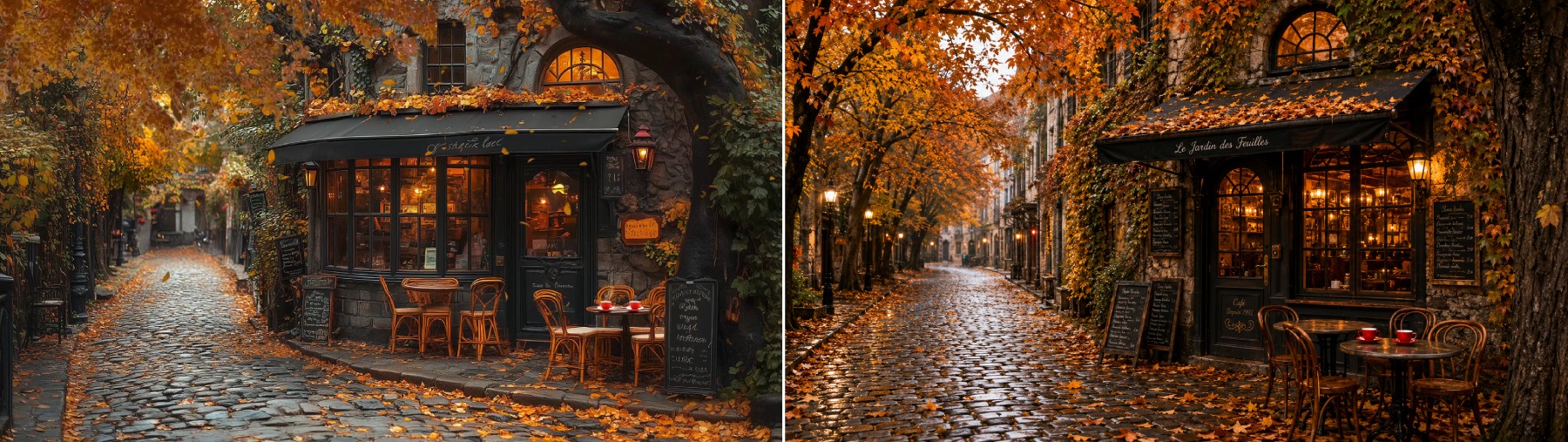
We've spent decades making image compression better.
JPEG throws away details your eyes probably won't notice. PNG keeps everything but produces larger files. Newer formats like WebP and AVIF squeeze images even further using smarter algorithms.
But what if we stopped compressing pixels altogether?
What if we compressed meaning instead?
That question sent me down a fun rabbit hole.
The Idea
The experiment is surprisingly simple.
Give an image to one AI and ask it to describe every visual detail it can possibly see. Then throw the original image away and give only that description to another AI image generator. The goal is to recreate the original image as accurately as possible.
Instead of storing millions of pixels, you're storing a semantic description of the scene.
You're no longer saving what every pixel looks like. You're saving what the image actually contains.
Is That Really Compression?
Sort of.
A detailed prompt may only be a few kilobytes of text, while the original image could be several megabytes. If another AI can reconstruct something visually close from that text alone, the compression ratio becomes surprisingly interesting.
Of course, there are some catches.
This Is Definitely Not Lossless
Traditional image formats preserve exactly what was captured, at least when using lossless compression. This approach does not.
Even the best description cannot perfectly capture every tiny texture, reflection, or random detail. On top of that, image generation models are not deterministic, so the exact same prompt can produce different results every time.
The reconstructed image often feels less like an exact copy and more like an incredibly accurate memory of the original.
The Prompt Matters More Than You Think
I quickly discovered that ordinary image captions are nowhere near enough.
A caption like "A person standing on a beach during sunset" is great for humans, but terrible if another AI needs to rebuild the image.
Instead, the description has to read almost like a technical specification. Camera angle, focal length, lighting direction, colors, materials, textures, object positions, proportions, shadows, reflections, depth of field, and countless other details suddenly become important.
The better the semantic specification, the closer the reconstruction gets.
Pixels vs. Instructions
One way to think about it is that traditional image formats store pixels, while this approach stores instructions.
Rather than recording the color of every pixel, the description explains the scene itself. It's less like saving a screenshot and more like saving the recipe that can recreate it.
Could This Ever Be Useful?
I don't think this replaces JPEG anytime soon.
If you need exact fidelity, conventional image compression is still the right tool.
But semantic representations could become useful in AI native systems, searchable image databases, or applications where understanding the content matters more than reproducing every single pixel.
As image generation models continue improving, something interesting happens: the stored description never changes, but the quality of reconstruction keeps getting better as the "decoder" improves.
That's a fascinating idea.